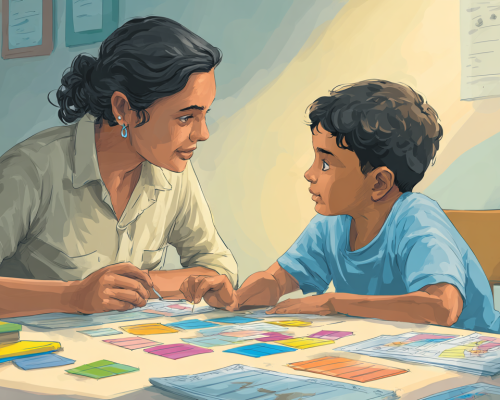

Many parents worry when their child struggles to keep up academically. Sometimes teachers may use the term “slow learner.” This does not mean a child cannot learn or succeed. It simply means the child learns at a slower pace than average and needs more time and support.If you notice these signs, a Special Education centre assessment can help.
This article answers common parent questions about slow learners using real research data, expert insights, and practical guidance.
What Is a Slow Learner?
A slow learner is a child who has below-average cognitive ability but does not have an intellectual disability. These children can learn academic skills, but they typically need more repetition, time, and structured support.
In classrooms, slow learners often struggle with:
Reading and writing
Mathematics
Understanding new concepts quickly
Processing instructions
However, with the right teaching strategies and encouragement, they can make meaningful academic progress.
IQ of a Slow Learner
The average IQ score is around 100, and most people fall between 85 and 115.
Research indicates that slow learners generally have an IQ range between 70 and 89.
Typical classification:
| IQ Range | Classification |
|---|---|
| 130+ | Very Superior |
| 115–129 | Above Average |
| 85–115 | Average |
| 70–89 | Slow Learner / Borderline Intelligence |
| Below 70 | Intellectual Disability |
Children in the 70–89 range may struggle academically but are capable of learning practical and academic skills with appropriate support.
Is a Slow Learner a Disability?
Technically, “slow learner” is not a medical diagnosis.
Instead, it refers to borderline intellectual functioning, meaning a child’s cognitive ability is below average but not low enough to qualify as an intellectual disability.
Many slow learners simply require:
Modified teaching methods
Extra practice
Individualized attention
Sometimes what appears to be slow learning may actually be caused by other conditions such as ADHD, language disorders, or dyslexia.
What Are the Top 5 Learning Disabilities?
Learning disabilities are neurological conditions that affect how a child processes information. Research suggests that 5–10% of the global population has some form of learning disability.
The most common types include:
1. Dyslexia
Difficulty with reading, spelling, and decoding words.
2. Dysgraphia
Problems with writing, spelling, and organizing thoughts on paper.
3. Dyscalculia
Difficulty understanding numbers, math concepts, and calculations.
4. ADHD (Attention Deficit Hyperactivity Disorder)
Impacts attention, impulse control, and learning efficiency.
5. Auditory or Language Processing Disorders
Difficulty understanding spoken language or instructions.
What Are the Symptoms of a Slow Learner?
Children who learn slowly often show consistent academic and behavioral patterns.
Common symptoms include:
Difficulty understanding new concepts
Slow reading and writing skills
Poor memory and difficulty recalling information
Trouble following instructions
Difficulty concentrating in class
Poor organization and planning skills
Low confidence or fear of academic tasks
Many children also develop low self-esteem because they realize they are falling behind peers.
5 Early Warning Signs of Learning Difficulties
Parents can identify early warning signs before serious academic gaps develop.
1. Delayed speech or language development
The child may speak later than peers.
2. Difficulty recognizing letters or numbers
Learning basic symbols takes longer.
3. Trouble remembering instructions
The child forgets tasks easily.
4. Poor attention span
Difficulty focusing on activities or lessons.
5. Difficulty with basic academic skills
Struggles with reading, writing, or math.
Early identification helps children receive timely intervention and support.
What Are the Causes of Learning Disabilities?
Learning difficulties can occur due to multiple biological and environmental factors.
Common causes include:
1. Genetic Factors
Learning disorders often run in families.
2. Brain Development Issues
Problems during brain development can affect learning abilities.
3. Prenatal and Birth Complications
Low birth weight, infections, or birth trauma may influence cognitive development.
4. Neurological Conditions
Conditions such as ADHD or language disorders affect learning processes.
5. Environmental Factors
Limited stimulation, trauma, or poor learning environments may contribute to learning difficulties.
How to Help a Child With Learning Disability or Slow Learning
Early support can dramatically improve a child’s academic and emotional outcomes.
Here are effective strategies:
1. Early Intervention
Therapies such as speech therapy, occupational therapy, or special education support improve learning outcomes.
2. Individualized Teaching
Use step-by-step instructions and break complex tasks into smaller parts.
3. Multi-sensory Learning
Teaching methods involving visual, auditory, and hands-on activities help children understand concepts better.
4. Encourage Strengths
Focus on areas where the child performs well—such as art, sports, or creativity.
5. Positive Reinforcement
Praise effort rather than results to build confidence.
Research shows that structured support and early intervention significantly improve educational outcomes for slow learners.
Can Slow Learners Be Successful?
Yes — absolutely.
Being a slow learner does not limit a child’s potential for success. Many individuals with slower academic learning excel in:
Practical skills
Creative fields
Entrepreneurship
Vocational careers
Studies also show that many slow learners become productive workers and responsible citizens when given proper educational support.
Success often depends on:
Early identification
Supportive teaching strategies
Family encouragement
Opportunities to develop strengths
Final Thoughts
A slow learner is simply a child who needs more time and support to learn, not a child who cannot learn.
With early intervention, structured teaching, and emotional encouragement, these children can build confidence, develop essential skills, and succeed academically and professionally.
The key is recognition, patience, and the right educational support system